

A man in his early fifties is having his morning tea when he suddenly notices that his right arm feels heavy and unresponsive. He tries to lift it, but it barely moves. When he calls out to his wife, his words come out slurred and jumbled. She immediately notices that one side of his face appears droopy. At first, they both wonder if it could be just extreme tiredness or low blood pressure. But something tells them this is different—this is urgent.
What this man is experiencing could be a brain stroke. Recognising the brain stroke symptoms and acting quickly can make the difference between a full recovery and a life-changing disability. For residents of Cuttack and across Odisha, knowing when to seek emergency care and understanding the importance of brain stroke treatment in Cuttack is essential knowledge that could save a life.
What Is a Brain Stroke?
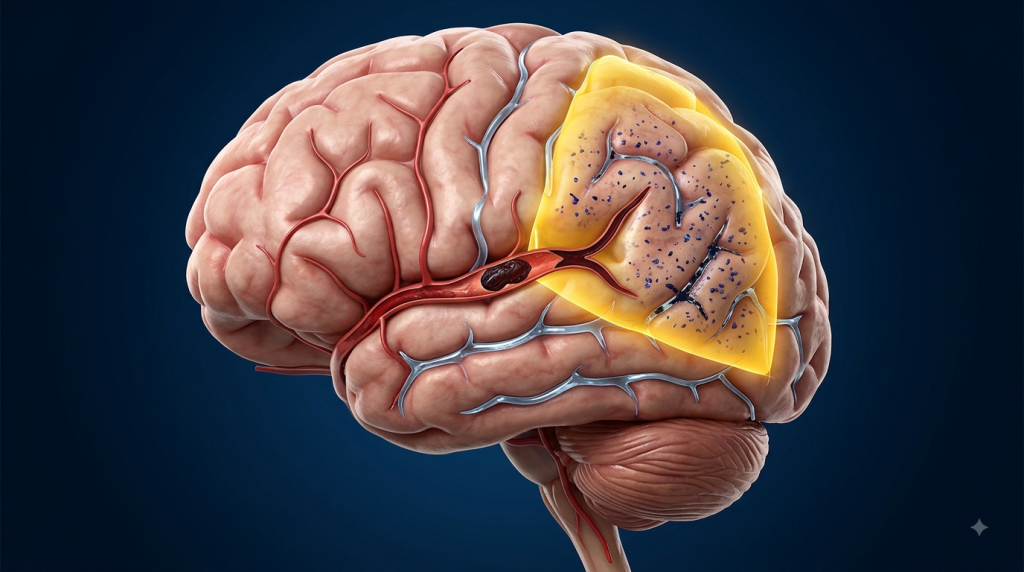
A brain stroke often called a “brain attack” occurs when blood supply to a part of the brain is interrupted or significantly reduced. Without blood, brain cells do not receive oxygen or nutrients, and they begin to die within minutes . This is why stroke is a medical emergency that requires immediate attention.
There are two major types of stroke:
- Ischaemic stroke: This is the more common type, accounting for about 80% of all strokes. It happens when a blood vessel supplying the brain becomes blocked, often by a blood clot.
- Haemorrhagic stroke: This occurs when a blood vessel in the brain bursts, causing bleeding inside or around the brain tissue. This type can cause more severe symptoms and often presents with a sudden, severe headache .
Some people may also experience a transient ischaemic attack (TIA) , sometimes called a “mini-stroke.” In a TIA, blood flow to the brain is temporarily blocked, and symptoms may resolve within a few minutes to hours. Even though the symptoms go away, a TIA is a serious warning sign that substantially increases the risk of a full-blown stroke .
Early Warning Signs of a Brain Stroke
Stroke symptoms often appear suddenly and without warning. They can vary from person to person, and not everyone will experience all symptoms. The key is to recognise that any sudden change in neurological function deserves urgent medical attention.
Common warning signs of a brain stroke include:
- Sudden weakness or numbness, particularly on one side of the body this may affect the face, arm, or leg
- Facial drooping one side of the face may feel numb or appear uneven, and the person may not be able to smile properly
- Difficulty speaking or understanding speech speech may become slurred, or the person may struggle to find the right words or understand what others are saying
- Sudden difficulty seeing—blurred or double vision, or loss of vision in one or both eyes
- Sudden dizziness, difficulty walking, or loss of balance the person may stagger, feel unsteady, or experience coordination problems
- Sudden severe headache a headache that comes on abruptly with no clear cause, sometimes described as “the worst headache of one’s life”
- Sudden confusion the person may appear disoriented or have trouble understanding their surroundings
It is important to note that stroke symptoms can vary. Some people may experience only one symptom, while others may have multiple symptoms appearing together .
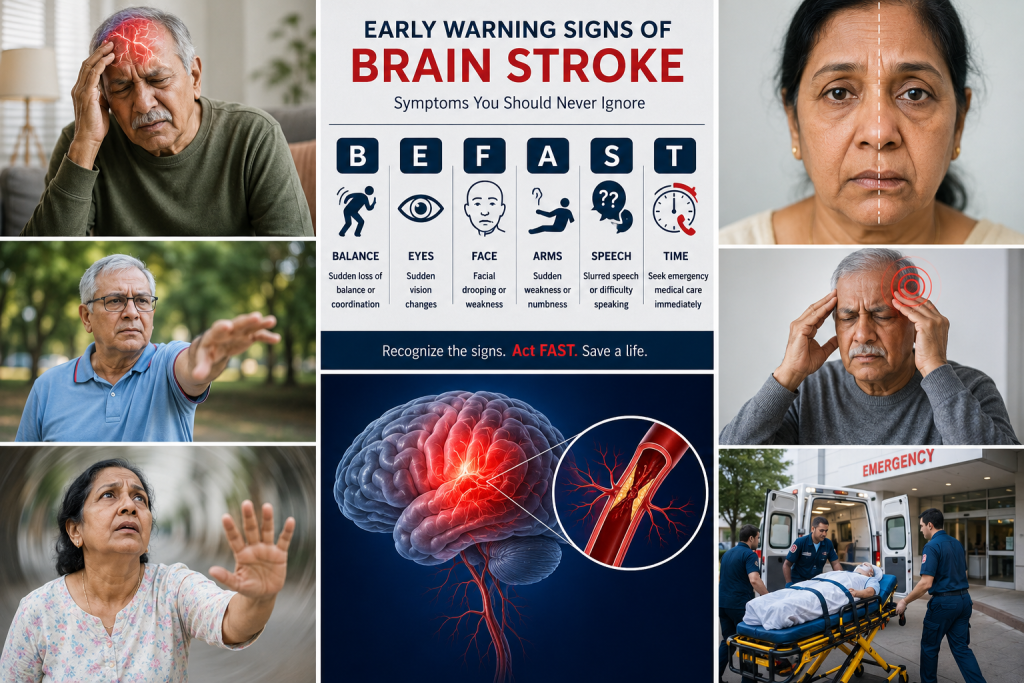
Remember BE FAST
The BE FAST acronym is a simple and effective tool to help you remember the major warning signs of a stroke and act quickly . Studies suggest that BE FAST may be more sensitive in detecting strokes than the older FAST method because it includes additional symptoms related to balance and vision .
| Letter | Meaning | What to Look For |
| B | Balance | Sudden loss of balance or coordination. Is the person unable to walk steadily or feeling dizzy? |
| E | Eyes | Sudden changes in vision. Is the person experiencing blurred vision, double vision, or loss of sight in one or both eyes? |
| F | Face | Facial drooping. Ask the person to smile. Does one side of the face droop or feel numb? |
| A | Arms | Arm weakness. Ask the person to raise both arms. Does one arm drift downward or feel weak? |
| S | Speech | Speech difficulty. Ask the person to repeat a simple sentence. Are the words slurred, or are they having trouble speaking or understanding? |
| T | Time | Time to act. If you observe any of these signs, call for emergency medical help immediately. Note the time when symptoms first appeared. |
Important: BE FAST is a recognition tool, not a diagnostic test. If you or someone around you shows any of these signs even if the symptoms seem mild or come and go do not wait. Seek emergency medical care immediately .
Why You Should Never Wait for the Symptoms to Go Away
Delaying medical assessment can be extremely dangerous. During a stroke, the brain loses approximately 2 million brain cells every minute that blood flow is interrupted . This is why stroke experts often say, “Time is brain.”
Here is what you should do if you suspect a stroke:
- Do not wait to see whether symptoms improve on their own
- Do not drive the patient yourself if emergency transport is available ambulance personnel are trained to provide initial care and can alert the hospital before arrival
- Note the time when the symptoms were first noticed, as this information is critical for treatment decisions
- Seek emergency medical care immediately
Treatment options, particularly for ischaemic stroke, are highly time-dependent. Clot-busting medications and other interventions can significantly reduce the risk of permanent disability, but they must be administered within a specific window after symptom onset.
Can Stroke Symptoms Be Temporary?
Yes. Some people experience temporary neurological symptoms that resolve within minutes or hours. This is known as a transient ischaemic attack (TIA) .
A TIA does not cause permanent brain damage, but it is a serious warning sign. Approximately one-third of people who experience a TIA will go on to have a full stroke within a year, often within the first 48 hours .
Temporary improvement does not mean the person is safe to ignore the episode. Anyone who experiences sudden neurological symptoms even if they resolve completely should seek urgent medical evaluation.
Common Stroke Risk Factors
While stroke can happen to anyone, certain factors increase the risk. Understanding these risk factors can help with prevention and early intervention.
Common risk factors include:
- High blood pressure—the single most important modifiable risk factor
- Diabetes—poorly controlled blood sugar damages blood vessels
- High cholesterol—contributes to the buildup of plaque in arteries
- Smoking or tobacco use—damages blood vessels and increases clotting risk
- Obesity and physical inactivity—contributes to other risk factors
- Heart conditions—including atrial fibrillation (irregular heartbeat)
- Previous stroke or TIA—significantly increases the risk of future stroke
- Excessive alcohol consumption
- Increasing age—although stroke can occur at any age, risk increases with age
It is important to note that stroke is not only a condition of older adults. Younger people, including those in their 30s and 40s, can also experience stroke, particularly if they have underlying risk factors.
When Should You See a Neurologist?
Neurological evaluation is appropriate in several situations:
- After any sudden unexplained neurological symptoms, even if they have resolved
- Following a suspected TIA
- After a previous stroke, for ongoing management and prevention of recurrence
- If you experience recurrent episodes of weakness, speech problems, or visual disturbance
- For ongoing neurological symptoms after emergency evaluation
Important: Suspected acute stroke is a medical emergency and should not be delayed for a routine outpatient appointment. Call emergency services immediately.
Brain Stroke Symptoms : Getting the Right Neurological Guidance
Recognising the brain stroke symptoms and seeking timely care is essential. In a city like Cuttack, where access to advanced medical care is available, knowing when and where to go can make a significant difference in outcomes.
Dr. Sonalika Behera is a neurologist in Cuttack, Odisha, and her practice includes the evaluation and management of neurological conditions, including brain stroke. Her approach emphasises proper neurological evaluation, timely diagnosis, and personalised treatment plans tailored to each patient’s needs.
For individuals who have experienced stroke or TIA, or those managing stroke risk factors, consultation with a neurologist can help in:
- Understanding the underlying cause of symptoms
- Developing a personalised prevention strategy
- Managing long-term neurological health
- Coordinating rehabilitation and recovery
Conclusion
A sudden change in the face, arm strength, speech, vision, or balance should never be casually ignored. Recognising possible stroke symptoms and acting quickly can make a meaningful difference in recovery and long-term quality of life. When you know what to look for and seek help without delay, you give yourself or your loved one the best possible chance of a good outcome.
If you or someone around you is experiencing any of the signs discussed in this article, do not wait seek emergency medical care immediately. And if you have risk factors for stroke or have experienced transient symptoms, a consultation with a neurologist can help you understand your risk and take steps toward prevention.
Frequently Asked Questions
1. What are the early warning signs of a brain stroke?
The early warning signs of a brain stroke can be remembered using the BE FAST acronym: sudden Balance problems, Eye or vision changes, Facial drooping, Arm weakness, Speech difficulty, and Time to act quickly. Other signs include sudden severe headache, confusion, and difficulty walking .
2. Can stroke symptoms come and go?
Yes. Some people experience temporary symptoms that resolve within minutes to hours. This is called a transient ischaemic attack (TIA) or “mini-stroke.” Even if symptoms go away, it is a warning sign that requires urgent medical evaluation .
3. What should I do if I suspect someone is having a stroke?
Call emergency services immediately. Do not wait to see if symptoms improve. Note the time when symptoms first appeared. Do not drive the person to the hospital yourself if emergency transport is available .
4. Is stroke only a condition of older adults?
No. While the risk of stroke increases with age, stroke can occur at any age, including in younger adults. People with risk factors such as high blood pressure, diabetes, smoking, or heart conditions are at higher risk regardless of age.
5. When should I consult a neurologist?
You should consider neurological consultation if you experience sudden unexplained neurological symptoms, a suspected TIA, or have had a previous stroke. If you have risk factors for stroke, discussing prevention strategies with a neurologist can also be helpful.
Book an Appointment
If you have concerns about your neurological health or wish to discuss stroke prevention and management, consultation is available at the following address:
Dr. Sonalika Behera
Neurologist
Subham Health Care
Ganguly Lane, Canal Road, Jobra Rd
Cuttack, Odisha – 753003
Phone: 80188 31399
Email: drsonalika10@gmail.com
Disclaimer: The information provided in this blog is intended for general educational and informational purposes only. It is not intended to replace professional medical advice, diagnosis, or treatment from a qualified healthcare professional.

