

What is Spondylosis?
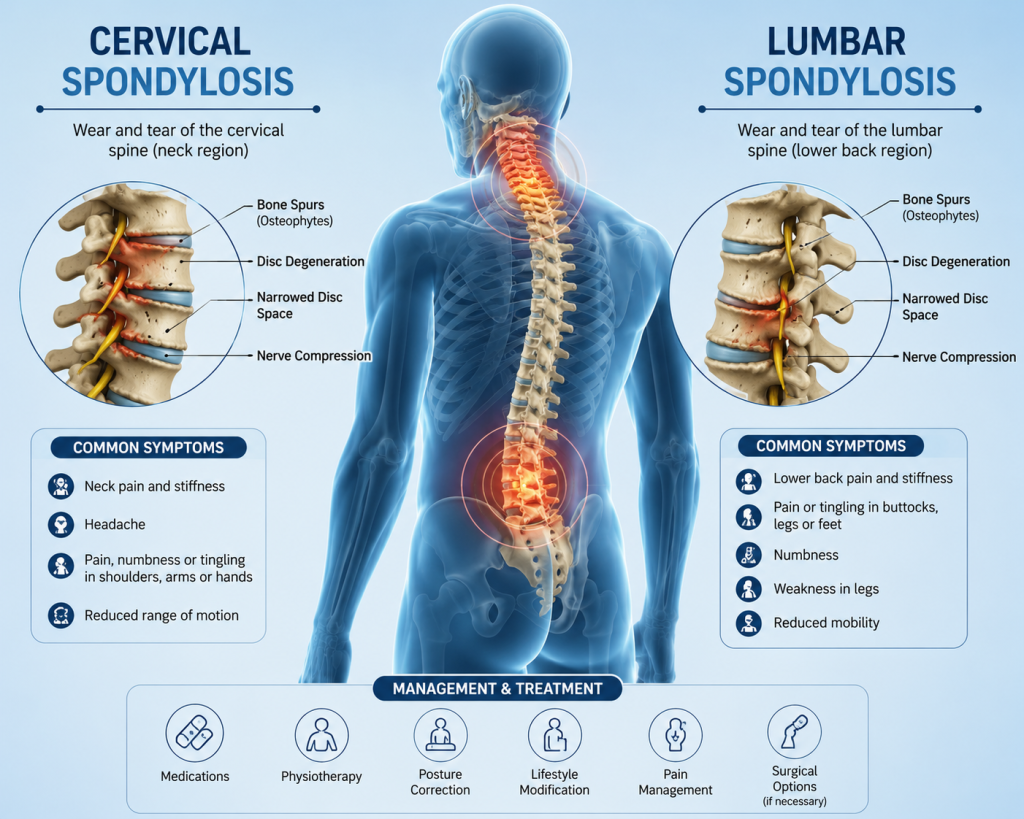
Spondylosis is a degenerative condition affecting the spine, characterized by the gradual wear and tear of spinal discs and vertebrae. Think of it as the natural aging process of your spine—similar to how joints in your knees or hips can deteriorate over time.
The condition occurs when the cushioning discs between vertebrae lose moisture and elasticity, leading to reduced spacing between bones. This degeneration can trigger bone spur formation, nerve compression, and significant discomfort.
Types of Spondylosis
Spondylosis manifests in different forms depending on which region of the spine is affected. The two most common types are:
Cervical Spondylosis
Cervical spondylosis affects the neck region (cervical spine), involving the seven vertebrae between your skull and upper back. This is the most prevalent form, affecting approximately 85% of people over 60 years old.
Characteristics:
- Affects C1 to C7 vertebrae
- Causes chronic neck pain and stiffness
- May lead to tingling sensation in hands
- Can compress spinal cord (cervical myelopathy)
- Often results from prolonged desk work or poor posture
The cervical spine supports your head’s weight (approximately 10-12 pounds) and allows extensive movement. This mobility, combined with constant stress, makes it particularly vulnerable to degenerative changes.
Lumbar Spondylosis
Lumbar spondylosis targets the lower back region, specifically the five vertebrae (L1-L5) between your ribs and pelvis. This area bears the maximum body weight and endures significant mechanical stress.
Characteristics:
- Affects lower back vertebrae
- Causes lumbar stiffness and chronic lower back pain
- May radiate pain to buttocks and legs
- Can lead to nerve compression (lumbar radiculopathy)
- Often worsened by prolonged sitting or heavy lifting
Both types can occur simultaneously, though cervical spondylosis tends to develop earlier due to neck mobility and screen-time posture issues prevalent in modern lifestyles.
What Causes Spondylosis? Understanding the Root Factors
Spondylosis doesn’t develop overnight. Multiple factors contribute to spinal degeneration:
Primary Causes:
1. Natural Aging Process As we age, spinal discs lose water content, becoming less flexible and more prone to tears. By age 40, most people show some degree of disc degeneration, though not everyone experiences symptoms.
2. Disc Dehydration Intervertebral discs contain 80% water at birth but gradually dehydrate with age. This loss of hydration reduces shock absorption capacity, increasing stress on vertebrae.
3. Bone Spur Formation (Osteophytes) When discs deteriorate, the body attempts to stabilize the spine by growing extra bone. These bone spurs can narrow the spinal canal and compress nerves—a condition called spinal stenosis.
4. Herniated Discs Cracks in disc exteriors allow inner material to leak out, pressing on nearby nerves and causing pain, numbness, or weakness.
5. Ligament Stiffening Spinal ligaments connecting vertebrae can become stiff and less flexible over time, limiting movement and contributing to discomfort.
Secondary Contributing Factors:
- Genetic predisposition: Family history significantly increases risk
- Repetitive stress injuries: From occupational activities or sports
- Previous spinal injuries: Trauma accelerates degeneration
- Sedentary lifestyle: Weakens supporting musculature
- Obesity: Increases mechanical stress on spine
- Smoking: Reduces disc nutrition and accelerates degeneration
Risk Factors: Who is Most Vulnerable?
Understanding risk factors helps in early prevention and intervention:
Age-Related Risk:
- Age 40+: Mild degeneration common
- Age 60+: 85% show radiographic changes
- Age 70+: Nearly universal presence
Occupational Hazards:
- Desk workers with poor ergonomics
- Heavy manual laborers
- Professional drivers
- Healthcare workers (lifting patients)
- Construction workers
Lifestyle Factors:
- Physical inactivity and weak core muscles
- Obesity (BMI >30)
- Chronic dehydration
- Poor nutritional status
- High-impact sports participation
Medical Conditions:
- Previous neck or back injuries
- Rheumatoid arthritis
- Osteoporosis
- Congenital spine abnormalities
Behavioral Factors:
- Smoking (doubles degeneration rate)
- Poor posture habits
- Excessive smartphone use (“tech neck”)
- Inadequate sleep positions
Symptoms of Cervical Spondylosis: Recognizing the Warning Signs
Interestingly, many people with cervical spondylosis remain asymptomatic. However, when symptoms occur, they can significantly impact daily activities.
Common Cervical Spondylosis Symptoms:
Neck-Related Symptoms:
- Chronic neck pain and stiffness (most common)
- Pain worsening with movement or holding head in one position
- Muscle spasms in neck and shoulders
- Grinding sensation (crepitus) when turning head
- Headaches originating from neck base
Nerve Compression Symptoms:
- Tingling sensation in hands and fingers
- Numbness in arms, hands, or fingers
- Weakness in arms or hands (difficulty gripping)
- Pain radiating down arms (cervical radiculopathy)
- Electric shock-like sensations
Severe Symptoms (Requiring Immediate Attention):
- Loss of bladder or bowel control
- Severe progressive weakness
- Coordination problems while walking
- Sudden loss of balance
- Difficulty with fine motor skills
Symptoms of Lumbar Spondylosis: Lower Back Warning Signs
Lumbar spondylosis manifests differently, focusing on lower back and leg symptoms:
Common Lumbar Spondylosis Symptoms:
Back-Related Symptoms:
- Chronic lower back pain (dull, aching quality)
- Lumbar stiffness, especially in mornings
- Pain worsening after prolonged sitting or standing
- Reduced flexibility and range of motion
- Muscle spasms in lower back
Nerve-Related Symptoms:
- Sciatica: shooting pain down legs
- Numbness or tingling in legs and feet
- Weakness in leg muscles
- Difficulty walking or standing for extended periods
- “Pins and needles” sensation in lower extremities
Advanced Symptoms:
- Neurogenic claudication (leg pain when walking)
- Spinal stenosis symptoms
- Cauda equina syndrome (medical emergency)
When to See a Doctor: Critical Decision Points
Knowing when to consult a medical specialist can prevent complications and accelerate recovery. Here’s when professional evaluation becomes essential:
Immediate Medical Attention Required:
- Loss of bladder or bowel control (potential cauda equina syndrome)
- Sudden severe weakness in arms or legs
- Progressive neurological symptoms
- Difficulty walking or maintaining balance
- Severe pain unresponsive to over-the-counter medication
Schedule an Appointment If:
- Neck or back pain persists beyond 2 weeks
- Tingling sensation in hands or feet doesn’t improve
- Pain interferes with sleep or daily activities
- Symptoms progressively worsen
- Numbness spreads or intensifies
- You experience frequent headaches with neck pain
Which Specialist Treats Cervical & Lumbar Spondylosis?
What kind of doctor do you see for cervical and lumbar spondylosis?
Several specialists can effectively treat spondylosis, depending on severity:
- Neurologists: Specialize in nerve-related complications and non-surgical management
- Orthopedic Surgeons: Handle structural spine issues and surgical interventions
- Physiatrists (PM&R): Focus on rehabilitation and functional restoration
- Pain Management Specialists: For chronic pain control
- Neurosurgeons: For complex surgical cases
Odisha seeking expert care:
Dr. Sonalika Behera is a trusted neurologist specializing in cervical and lumbar spondylosis management in Cuttack. With extensive experience in diagnosing and treating spinal degeneration conditions, Dr. Behera provides comprehensive, patient-centered care combining medical treatment with lifestyle guidance.
Contact Information:
- Phone: 80188 31399
- Email: drsonalika10@gmail.com
- Location: Subham HealthCare, Ganguly Lane, Canal Road, Jobra Rd, Cuttack, Odisha 753003
If you’re searching for the best doctor for cervical spondylosis in Cuttack or need expert evaluation for lumbar symptoms, Dr. Behera offers evidence-based treatment protocols tailored to individual patient needs.
Diagnosis & Tests: How Spondylosis is Confirmed
Accurate diagnosis combines clinical evaluation with advanced imaging:
Clinical Examination:
1. Medical History Review
- Symptom timeline and progression
- Previous injuries or surgeries
- Occupational and lifestyle factors
- Family history of spinal conditions
2. Physical Neurological Examination
- Range of motion assessment
- Reflex testing
- Muscle strength evaluation
- Sensory function testing
- Gait and balance analysis
3. Provocation Tests
- Spurling’s test (cervical radiculopathy)
- Straight leg raise test (lumbar radiculopathy)
- Hoffman’s sign (cervical myelopathy)
Diagnostic Imaging:
X-Rays (Radiography)
- First-line imaging for bone changes
- Reveals disc space narrowing
- Shows bone spur formation
- Detects vertebral alignment issues
MRI (Magnetic Resonance Imaging)
- Gold standard for soft tissue visualization
- Shows disc herniation and degeneration
- Reveals nerve compression
- Identifies spinal cord involvement
- Best for surgical planning
CT Scan (Computed Tomography)
- Detailed bone structure imaging
- Useful when MRI is contraindicated
- Often combined with myelography
- Excellent for spinal stenosis evaluation
Electromyography (EMG) and Nerve Conduction Studies
- Confirms nerve damage
- Identifies specific affected nerves
- Differentiates from other neurological conditions
- Guides treatment decisions
Myelography
- Contrast dye injection into spinal canal
- Enhanced visualization of spinal cord and nerves
- Used when MRI cannot be performed
Treatment Options: Comprehensive Management Strategies
Spondylosis treatment follows a stepwise approach, starting conservatively and progressing to invasive options only when necessary.
Non-Surgical Medical Treatment
1. Medications
Pain Relief:
- NSAIDs: Ibuprofen (400-800mg), Naproxen (250-500mg)
- Reduces inflammation and pain
- Use for acute flare-ups
- Acetaminophen: For mild to moderate pain
- 500-1000mg every 6 hours
- Safer for long-term use
Muscle Relaxants:
- Cyclobenzaprine (5-10mg)
- Tizanidine (2-4mg)
- Reduces muscle spasms and stiffness
- Short-term use (2-3 weeks)
Neuropathic Pain Medications:
- Gabapentin (300-900mg daily)
- Pregabalin (75-300mg daily)
- Effective for nerve pain and tingling sensation in hands
- Oral prednisone for severe inflammation
- Epidural steroid injections for nerve root compression
- Provides temporary but significant relief
2. Physiotherapy for Spondylosis
Physical therapy forms the cornerstone of conservative management:
Benefits:
- Strengthens neck and back muscles
- Improves posture and alignment
- Enhances flexibility and range of motion
- Reduces nerve compression through traction
- Prevents future degeneration
Common Techniques:
- Manual therapy and joint mobilization
- Therapeutic exercises
- Cervical/lumbar traction
- Ultrasound therapy
- TENS (Transcutaneous Electrical Nerve Stimulation)
- Heat and cold therapy
- Posture correction training
Typical Protocol:
- Initial assessment: 1 hour
- Sessions: 3-5 times per week
- Duration: 6-12 weeks
- Home exercise program integration
3. Lifestyle Changes & Ergonomic Modifications
Workspace Adjustments:
- Monitor at eye level
- Chair with proper lumbar support
- Feet flat on floor
- Keyboard and mouse within easy reach
- Frequent position changes (every 30 minutes)
Sleep Hygiene:
- Medium-firm mattress
- Cervical pillow for neck support
- Side sleeping with pillow between knees (lumbar)
- Avoid stomach sleeping
Daily Habits:
- Maintain healthy weight (reduces spinal load)
- Stay hydrated (disc health)
- Quit smoking (improves disc nutrition)
- Practice stress management
- Use proper lifting techniques
4. Alternative Therapies
Chiropractic Care:
- Spinal manipulation and adjustment
- Evidence varies; choose certified practitioners
- Caution in severe cases with myelopathy
Acupuncture:
- May reduce chronic pain
- Stimulates natural pain-relieving mechanisms
- Complementary to conventional treatment
Massage Therapy:
- Reduces muscle tension
- Improves circulation
- Provides temporary symptom relief
Interventional Procedures
1. Epidural Steroid Injections
- Delivers corticosteroids directly to inflamed nerve roots
- Provides relief for 3-6 months
- Can be repeated 2-3 times yearly
- 60-70% success rate for radicular pain
2. Facet Joint Injections
- Targets small joints connecting vertebrae
- Includes local anesthetic and steroid
- Diagnostic and therapeutic purposes
3. Nerve Root Blocks
- Identifies specific pain-generating nerve
- Guides further treatment decisions
4. Radiofrequency Ablation
- Uses heat to disable pain-transmitting nerves
- Longer-lasting relief (6-12 months)
- Minimally invasive outpatient procedure
General Spine Health Exercises
Walking: 30 minutes daily, low-impact aerobic exercise
Swimming: Excellent for spine without loading
Yoga: Gentle stretching and strengthening (avoid extreme flexion/extension)
Pilates: Core strengthening and posture improvement
Prevention Tips: Protecting Your Spine for Life
Prevention is always better than treatment. These evidence-based strategies can delay or prevent spondylosis:
Daily Habits
1. Practice Perfect Posture
- Stand tall with shoulders back
- Keep ears aligned with shoulders
- Avoid prolonged head-forward positions
- Use mirrors to check alignment
2. Optimize Your Workstation
- Follow “20-20-20 rule”: Every 20 minutes, look 20 feet away for 20 seconds
- Adjust screen height
- Use ergonomic chair
- Take standing breaks
3. Maintain Healthy Weight
- Each pound of excess weight adds 4 pounds of pressure on spine
- BMI 18.5-24.9 is optimal
- Combine diet with exercise
4. Stay Hydrated
- Drink 8-10 glasses of water daily
- Maintains disc hydration and nutrition
- Improves tissue elasticity
5. Sleep Smart
- Use supportive pillow
- Replace mattress every 7-10 years
- Maintain neutral spine alignment
- Avoid stomach sleeping
Lifestyle Modifications
6. Exercise Regularly
- Mix strength training and cardio
- Focus on core strengthening
- Include flexibility work
- Aim for 150 minutes weekly
7. Quit Smoking
- Smoking reduces disc nutrition by 20-30%
- Accelerates degeneration
- Impairs healing
- Seek cessation programs if needed
8. Lift Properly
- Bend at knees, not waist
- Keep object close to body
- Avoid twisting while lifting
- Ask for help with heavy items
9. Manage Stress
- Chronic stress increases muscle tension
- Practice relaxation techniques
- Consider meditation or yoga
- Ensure adequate sleep (7-9 hours)
Nutritional Support
10. Spine-Healthy Diet
- Calcium: 1000-1200mg daily (dairy, leafy greens)
- Vitamin D: 600-800 IU daily (sunlight, supplements)
- Omega-3 Fatty Acids: Reduces inflammation (fish, flaxseed)
- Vitamin C: Collagen synthesis (citrus, berries)
- Magnesium: Muscle relaxation (nuts, whole grains)
Complications if Left Untreated: Understanding the Risks
Ignoring spondylosis symptoms can lead to serious complications:
Neurological Complications
1. Cervical Myelopathy
- Spinal cord compression
- Progressive weakness in all extremities
- Coordination problems
- Bladder/bowel dysfunction
- May require emergency surgery
2. Radiculopathy
- Chronic nerve root compression
- Permanent nerve damage
- Persistent weakness and numbness
- Chronic pain syndrome
3. Spinal Cord Injury
- Minor trauma can cause severe injury in stenotic spine
- Paralysis risk
- Life-altering consequences
Functional Complications
4. Chronic Pain Syndrome
- Daily pain affecting quality of life
- Depression and anxiety
- Sleep disturbances
- Social isolation
- Reduced productivity
5. Disability
- Loss of employment
- Inability to perform daily activities
- Dependence on others
- Financial burden
6. Adjacent Segment Disease
- Accelerated degeneration of neighboring spinal levels
- Common after fusion surgery
- May require additional procedures
Quality of Life Impact
7. Mental Health Issues
- Chronic pain linked to depression (40-60% of patients)
- Anxiety disorders
- Reduced social engagement
- Decreased life satisfaction
8. Reduced Mobility
- Difficulty walking
- Balance problems
- Increased fall risk
- Loss of independence
Spondylosis vs Slip Disc vs Sciatica: Clearing the Confusion
These terms are often confused. Here’s how they differ:
Spondylosis
- Definition: Degenerative condition affecting spine structure
- Cause: Age-related wear and tear
- Location: Any spinal region
- Primary Issue: Disc degeneration, bone spurs
- Pain Pattern: Localized with possible radiation
- Treatment: Conservative to surgical
Slip Disc (Herniated Disc)
- Definition: Disc nucleus pushes through outer ring
- Cause: Injury, sudden strain, or degeneration
- Location: Most common at L4-L5, L5-S1
- Primary Issue: Disc material compressing nerves
- Pain Pattern: Sharp, radiating pain (sciatica if lumbar)
- Treatment: Usually resolves with conservative care
Sciatica
- Definition: Symptom, not a diagnosis
- Cause: Sciatic nerve compression (often from herniated disc)
- Location: Lower back radiating to leg
- Primary Issue: Nerve irritation
- Pain Pattern: Shooting pain down back of leg
- Treatment: Address underlying cause
Key Difference: Spondylosis is a chronic degenerative process, herniated disc is an acute event (though can occur in degenerative spine), and sciatica is a symptom that can result from either condition.
Consult Dr. Sonalika Behera – a trusted and experienced neurologist specializing in comprehensive cervical and umbar spondylosis management in Cuttack, Odisha.
Why Choose Dr. Sonalika Behera?
✓ Specialized expertise in neurological spine conditions
✓ Comprehensive diagnostic evaluation using latest technology
✓ Evidence-based treatment protocols tailored to your needs
✓ Patient-centered approach focusing on quality of life
✓ Integration of medical treatment with physiotherapy guidance
✓ Clear communication and compassionate care
When searching for the best doctor for cervical spondylosis in Cuttack or the best doctor for lumbar spondylosis near you, Dr. Behera offers:
- Thorough neurological examination and diagnosis
- Personalized non-surgical treatment for cervical spondylosis
- Medical management for chronic neck pain and lower back pain
- Guidance on physiotherapy for spondylosis and spine exercises
- Coordination with surgical specialists when needed
- Long-term follow-up and prevention strategies
Phone: 80188 31399
Email: drsonalika10@gmail.com
Clinic Location: Subham HealthCare,
Ganguly Lane,
Canal Road, Jobra Rd,
Cuttack, Odisha 753003
Don’t let spondylosis control your life. Take the first step toward pain-free living today.
Frequently Asked Questions (FAQ)
Q1: Can cervical spondylosis be cured completely?
Answer: Cervical spondylosis cannot be completely cured as it involves permanent degenerative changes. However, symptoms can be effectively managed through medications, physiotherapy, lifestyle modifications, and in severe cases, surgery. Most patients achieve significant symptom relief and maintain good quality of life with proper treatment.
Q2: What is the best treatment for cervical spondylosis?
Answer: The best treatment for cervical spondylosis depends on severity. Mild cases respond well to physiotherapy, pain medications (NSAIDs), and lifestyle changes. Moderate cases may need epidural injections, while severe cases with myelopathy might require surgical intervention like ACDF. Consult a neurologist or spine specialist for personalized treatment.
Q3: How long does it take to recover from spondylosis?
Answer: Recovery time varies by treatment approach. Conservative management (physiotherapy, medications) typically shows improvement in 6-12 weeks. Post-surgical recovery ranges from 4-6 weeks for minimally invasive procedures to 3-6 months for spinal fusion. Ongoing maintenance through exercise and lifestyle changes is lifelong.
Q4: Is spondylosis a serious condition?
Answer: Spondylosis severity ranges from mild (manageable with lifestyle changes) to severe (causing spinal cord compression). While many people have asymptomatic spondylosis, untreated progressive cases can lead to permanent nerve damage, chronic pain, and disability. Early diagnosis and treatment prevent serious complications.
Q5: Can I exercise with cervical or lumbar spondylosis?
Answer: Yes, appropriate exercises are crucial for spondylosis management. Low-impact activities like walking, swimming, and specific physiotherapy exercises strengthen supporting muscles and improve flexibility. Avoid high-impact sports, heavy lifting, and extreme neck movements. Always consult your doctor before starting an exercise program.
Q6: What kind of doctor should I see for spondylosis?
Answer: Neurologists specialize in nerve-related spondylosis complications and non-surgical management. Orthopedic surgeons handle structural issues and surgical interventions. Physiatrists focus on rehabilitation. For comprehensive cervical and lumbar spondylosis care in Cuttack, Dr. Sonalika Behera (Neurologist) offers expert diagnosis and treatment.
Q7: Does spondylosis get worse with age?
Answer: Spondylosis is a progressive degenerative condition that typically worsens gradually with age. However, progression rate varies significantly. Proper management through exercise, weight control, good posture, and early treatment can slow degeneration and maintain function for decades.

