

What is Parkinson’s Disease?
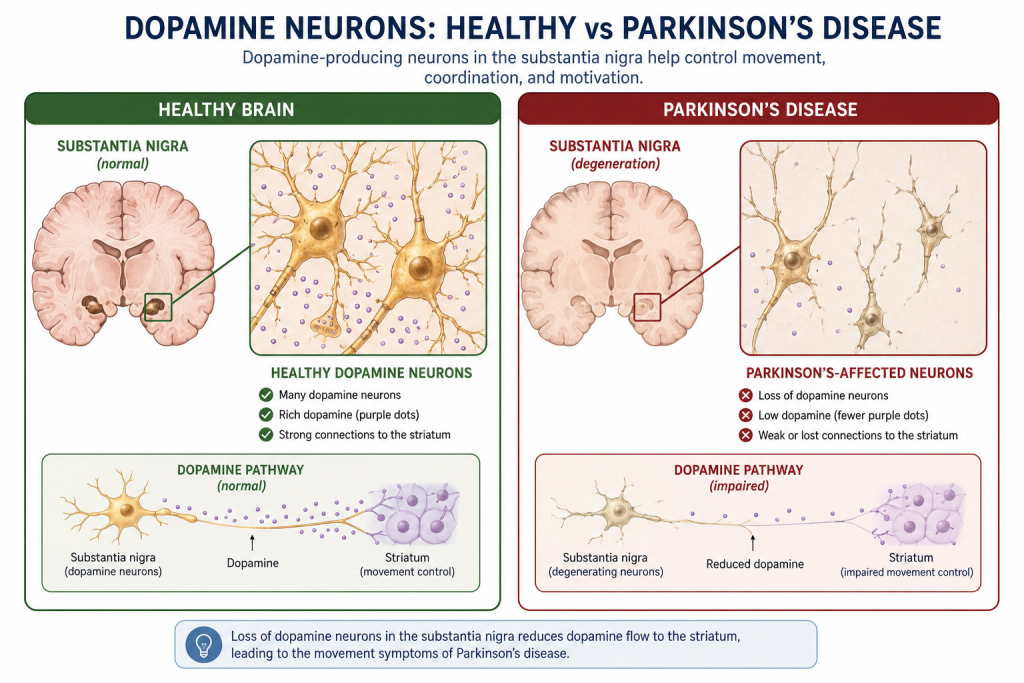
Parkinson’s disease is a progressive neurodegenerative disorder that primarily affects movement control. It occurs when nerve cells (neurons) in a specific brain region called the substantia nigra gradually deteriorate or die. These neurons are responsible for producing dopamine—a crucial chemical messenger that coordinates smooth, controlled muscle movements.
Parkinson’s disease is a progressive neurological disorder caused by the loss of dopamine-producing neurons in the brain’s substantia nigra. This leads to tremors, muscle stiffness, slowed movement, and balance problems. It’s a chronic condition affecting movement, speech, and daily activities, requiring specialized neurologist care and long-term management.
When dopamine levels drop significantly (by about 60-80%), the characteristic symptoms of Parkinson’s begin to emerge. The disease doesn’t just affect physical movement—it can also impact cognition, mood, sleep, and other bodily functions.
Key Characteristics:
- Progressive nature: Symptoms worsen gradually over time
- Chronic condition: Currently no cure, but manageable
- Variable progression: Affects each person differently
- Movement disorder: Primary symptoms involve motor control
- Dopamine deficiency: Root cause of most symptoms
- Age-related: Most common onset after age 60
Early Signs & Symptoms of Parkinson’s Disease
Primary Motor Symptoms (The Cardinal Signs):
1. Tremors (Resting Tremor)
- Most recognizable symptom
- Usually starts in one hand or finger
- Occurs at rest, decreases with movement
- “Pill-rolling” motion (thumb and forefinger)
- May affect jaw, lips, or legs
- Typically begins on one side of body
2. Bradykinesia (Slowed Movement)
- Gradual reduction in movement speed
- Difficulty initiating movement
- Reduced arm swing while walking
- Shorter, shuffling steps
- Difficulty with repetitive movements
- Decreased facial expressions (masked face)
- Reduced blinking
3. Muscle Rigidity (Stiffness)
- Muscle tension and stiffness
- Resistance when moving limbs
- “Cogwheel rigidity” (jerky resistance)
- Painful muscle cramps
- Limited range of motion
- Stiff, stooped posture
4. Postural Instability (Balance Problems)
- Impaired balance and coordination
- Increased fall risk (usually later stages)
- Difficulty with sudden direction changes
- Stooped, forward-leaning posture
- Difficulty standing from sitting position
Early Non-Motor Symptoms:
Subtle Warning Signs:
- Loss of smell (hyposmia): Often appears years before motor symptoms
- Sleep disturbances: REM sleep behavior disorder, insomnia, excessive daytime sleepiness
- Constipation: Digestive system slowing
- Soft or slurred speech: Voice changes, monotone speaking
- Small handwriting (micrographia): Letters becoming smaller and cramped
- Mood changes: Depression, anxiety, apathy
- Fatigue: Persistent tiredness unrelated to activity
- Dizziness: Especially when standing (orthostatic hypotension)
What Causes Parkinson’s Disease?
The exact cause of Parkinson’s disease remains under investigation, but research has identified several contributing factors:
Primary Pathological Changes In Parkinson’s Disease:
1. Dopamine Neuron Degeneration
- Progressive death of dopamine-producing cells in substantia nigra
- By symptom onset, 60-80% of dopamine neurons are lost
- Leads to dopamine deficiency in brain circuits controlling movement
- Disrupts communication between brain regions
2. Lewy Body Formation
- Abnormal protein deposits (alpha-synuclein) accumulate inside neurons
- These clumps, called Lewy bodies, interfere with normal cell function
- Found in brains of Parkinson’s patients at autopsy
- May trigger inflammatory processes
Contributing Factors:
Genetic Factors (10-15% of cases):
- Familial Parkinson’s: Runs in families
- Genetic mutations: LRRK2, PARK7, PINK1, PRKN, SNCA genes
- Increased risk: Having first-degree relative with Parkinson’s
- Young-onset cases: More likely to have genetic component
Environmental Factors:
- Pesticide exposure: Agricultural chemicals linked to increased risk
- Herbicide exposure: Particularly paraquat
- Heavy metals: Lead, manganese exposure
- Industrial chemicals: Solvents, trichloroethylene (TCE)
- Rural living: Possibly due to agricultural chemical exposure.
- Well water consumption: In some agricultural areas
Age-Related Factors:
- Natural aging of dopamine neurons
- Reduced cellular repair mechanisms
- Cumulative oxidative stress over lifetime
- Mitochondrial dysfunction
Risk Factors: Who is Most Vulnerable?
Understanding risk factors helps identify those who should be particularly vigilant about symptoms:
Non-Modifiable Risk Factors:
Age:
- Specifically, the risk increases significantly after 60.
- Furthermore, the average onset age is 60 years.
- However, 5-10% of cases develop before age 50 (early-onset).
- Ultimately, the incidence rises to 1-2% by age 70.
Sex:
- Men have 1.5 times more likely than women
- Hormonal factors may provide some protection in women
- Symptoms may differ between sexes
Race/Ethnicity:
- Higher prevalence in Caucasian populations
- Lower rates in Asian and African populations
- Genetic and environmental factors may contribute
Family History:
- 10-15% have affected family member
- Risk doubles with first-degree relative affected
- Risk increases further with multiple affected relatives
Modifiable/Associated Risk Factors Of Parkinson’s Disease:
Occupational Exposures:
- Agricultural workers (pesticide exposure)
- Welders (manganese exposure)
- Industrial workers (solvent exposure)
- Military personnel (certain chemical exposures)
Lifestyle Factors:
- Physical inactivity (moderate evidence)
- Dairy consumption (controversial)
- Coffee and tea consumption (protective effect observed)
- Smoking (paradoxically shows protective association—NOT recommended)
Medical History:
- Traumatic brain injury
- Certain medications (rarely)
- REM sleep behavior disorder
Stages of Parkinson’s Disease: Understanding Progression
Parkinson’s disease progression is commonly described using the Hoehn and Yahr Scale, which outlines five distinct stages:
Stage 1: Mild Symptoms
Characteristics:
- Symptoms on one side of body only (unilateral)
- Mild tremor in one hand or leg
- Subtle changes in posture, walking, facial expression
- Close friends/family may notice changes
Duration: Variable progression
Treatment: Usually manageable with medication
Quality of Life: Minimal impact
Stage 2: Moderate Symptoms
Characteristics:
- Symptoms affect both sides of body (bilateral).
- Noticeable walking difficulties.
- Poor posture becoming evident.
- Still able to live independently.
- Daily tasks take longer but remain achievable.
- .Balance generally preserved.
Duration: Variable progression
Treatment: Medications typically effective
Quality of Life: Some limitations but good independence
Stage 3: Mid-Stage Disease
Characteristics:
- Loss of balance becomes apparent
- Falls become more common
- Movements significantly slower
- Difficulty with physical tasks
- Can still function independently with effort
- Turning point in disease progression
Duration: Several years typically
Treatment: May require medication adjustments
Quality of Life: Moderate impact, adaptive strategies needed
Stage 4: Severe Symptoms
Characteristics:
- Symptoms severely limiting
- Assistance required for daily activities
- Standing and walking very difficult
- Cannot live alone safely
- Tremors may paradoxically decrease
- Rigidity and bradykinesia dominate
Duration: Can persist for years with proper care
Treatment: Complex medication regimens, possible DBS
Quality of Life: Significant assistance required
Stage 5: Advanced Disease
Characteristics:
- Most advanced stage
- Unable to stand or walk
- Wheelchair or bed-bound
- 24-hour nursing care required
- Severe motor symptoms
- May experience hallucinations, dementia
- Swallowing difficulties common
Duration: Variable
Treatment: Palliative care focus
Quality of Life: Comfort and dignity prioritized
Important Note: Not everyone progresses through all stages, and progression speed varies greatly. With modern treatments, many patients maintain good quality of life for many years.
Types of Parkinsonism: Understanding the Differences
1. Idiopathic Parkinson’s Disease (IPD)
- Most common form (80-85% of cases)
- No known specific cause
- Responds well to dopamine replacement therapy
- What this article primarily addresses
2. Vascular Parkinsonism
- Caused by multiple small strokes
- “Lower body Parkinsonism” (affects legs more than arms)
- Poor response to Parkinson’s medications
- May have cognitive changes early
3. Drug-Induced Parkinsonism
- Caused by certain medications (antipsychotics, anti-nausea drugs)
- Symptoms usually reversible when medication stopped
- Affects both sides equally from onset
- No tremor at rest typically
4. Atypical Parkinsonian Disorders:
Progressive Supranuclear Palsy (PSP):
- Early balance problems and falls
- Difficulty looking up and down
- Poor response to Parkinson’s medications
- Faster progression
Multiple System Atrophy (MSA):
- Additional autonomic symptoms (blood pressure, bladder control)
- Poor medication response
- Faster progression than typical Parkinson’s
- May involve coordination problems
Lewy Body Dementia:
- Early cognitive decline
- Visual hallucinations
- Fluctuating attention and alertness
- Parkinson’s symptoms develop alongside dementia
Corticobasal Degeneration:
- Very asymmetric symptoms
- Dystonia (abnormal postures)
- Cognitive changes
- Poor treatment response
Accurate diagnosis is crucial because treatment approaches differ significantly among these conditions.
What Type of Doctor Treats Parkinson’s Disease?
This is one of the most common questions from newly diagnosed patients and their families.
Primary Specialists:
1. Neurologist – The Primary Care Physician for Parkinson’s
A neurologist specializes in brain and nervous system disorders. They are the primary doctors who:
- Diagnose Parkinson’s disease through clinical examination
- Prescribe and adjust medications
- Monitor disease progression
- Coordinate overall care
- Order and interpret diagnostic tests
2. Movement Disorder Specialist
A subspecialist neurologist with additional training in Parkinson’s and related conditions. They offer:
- Expertise in complex cases
- Advanced treatment options
- Deep brain stimulation evaluation
- Clinical trial access
- Nuanced medication management
Supporting Healthcare Professionals For Parkinson’s Disease:
3. Physiotherapist (Physical Therapist)
- Improves mobility and balance
- Teaches fall prevention strategies
- Maintains flexibility and strength
- Gait training
4. Occupational Therapist
- Adapts daily activities
- Recommends assistive devices
- Home safety evaluations
- Energy conservation techniques
5. Speech-Language Pathologist
- Addresses speech difficulties
- Treats swallowing problems
- Voice strengthening exercises (LSVT LOUD therapy)
6. Psychiatrist/Psychologist
- Manages depression and anxiety
- Cognitive behavioral therapy
- Addresses sleep disorders
- Supports emotional wellbeing
7. Dietitian/Nutritionist
- Optimizes nutrition for Parkinson’s
- Manages constipation through diet
- Addresses weight loss concerns
- Times meals with medications
Finding the Right Doctor:
What doctor to see for Parkinson’s disease? Start with a neurologist. If available in your area, a movement disorder specialist provides the highest level of expertise.
Best Doctors for Parkinson’s Disease in India
India has made significant strides in neurology care, with excellent specialists and facilities available across the country. When searching for the best doctors for Parkinson’s disease in India, consider these factors:
What Makes a Great Parkinson’s Doctor?
✓ Specialized training in neurology or movement disorders
✓ Years of experience managing Parkinson’s patients
✓ Up-to-date knowledge of latest treatments
✓ Compassionate, patient-centered approach
✓ Access to multidisciplinary care team
✓ Availability of advanced treatments (DBS, clinical trials)
✓ Good communication and willingness to explain
✓ Hospital affiliations with good infrastructure
Don’t Wait—Early Intervention Makes a Difference
If you or a loved one is experiencing tremors, movement difficulties, stiffness, balance problems, or other concerning neurological symptoms, prompt evaluation by an experienced neurologist is crucial.
Expert Parkinson’s Care at Subham HealthCare, Cuttack
Dr. Sonalika Behera offers comprehensive, compassionate care for Parkinson’s disease and movement disorders, serving patients throughout Cuttack, Odisha, and surrounding regions.
Comprehensive Services Include:
✓ Detailed Neurological Assessment: Thorough examination and accurate diagnosis
✓ Personalized Treatment Plans: Tailored to your specific symptoms, stage, and lifestyle
✓ Medication Management: Optimal drug selection and dosing for symptom control
✓ Ongoing Monitoring: Regular follow-ups to adjust treatment as needed
✓ Multidisciplinary Coordination: Referrals to physiotherapy, speech therapy, and other specialists
✓ Patient Education: Understanding your condition and treatment options
✓ Family Support: Guidance for caregivers and loved ones
✓ Long-Term Partnership: Continuous care through all disease stages
Why Choose Dr. Sonalika Behera?
Specialized Neurological Expertise in Parkinson’s and movement disorders.
Patient-Centered Approach with time dedicated to listening and explaining.
Evidence-Based Practice incorporating latest research and treatments.
Accessible Local Care eliminating need for distant travel.
Compassionate Care understanding the challenges patients and families face.
Comprehensive Management addressing motor and non-motor symptoms.
Timely Appointments respecting your time and needs.
Schedule Your Consultation Today
Early diagnosis and treatment significantly improve long-term outcomes. Don’t delay—take the first step toward better symptom management and improved quality of life.
Contact Information:
Dr. Sonalika Behera
Trusted Neurologist for Parkinson’s Disease
Phone: +918018831399
Email: drsonalika10@gmail.com
Address: Subham HealthCare,
Ganguly Lane,
Canal Road, Jobra Rd,
Cuttack, Odisha 753003
Location: View on Google Maps
Appointment Booking:
Call the clinic directly at 80188 31399 to schedule your consultation. Our friendly staff will:
- Answer your questions about services and appointments
- Find a convenient appointment time
- Provide directions to the clinic
- Explain what to bring to your first visit
What to Bring to Your First Appointment:
✓ List of current medications and supplements
✓ Previous medical records and test results (if available)
✓ Insurance information
✓ List of symptoms and when they started
✓ Questions you want to ask
✓ Family member or friend for support
Take Action Now
Parkinson’s disease is most manageable when addressed early and comprehensively. Dr. Sonalika Behera and the team at Subham HealthCare are ready to provide the expert, compassionate care you deserve.
Call 80188 31399 today to schedule your consultation and begin your journey toward better symptom control and improved quality of life.
Frequently Asked Questions About Parkinson’s Disease
Q1: What are the first signs of Parkinson’s disease?
Answer: The earliest signs often include a slight tremor in one hand, loss of sense of smell, sleep disturbances (acting out dreams), constipation, and small handwriting. Motor symptoms like tremor, stiffness, and slowed movement typically develop gradually and may go unnoticed initially. If you notice these symptoms persisting, consult a neurologist for evaluation.
Q2: How quickly does Parkinson’s disease progress?
Answer: Progression varies greatly between individuals. Some people progress slowly over 20-30 years, while others decline more rapidly. Factors affecting progression include age at diagnosis (younger onset usually slower), symptom type (tremor-dominant typically slower), medication response, and overall health. Regular medical care and active lifestyle can positively influence progression.
Q3: What is the life expectancy with Parkinson’s disease?
Answer: With modern treatments, life expectancy for Parkinson’s patients is approaching that of the general population. Many people live 10-20+ years after diagnosis with good quality of life. Life expectancy depends on age at diagnosis, overall health, treatment adherence, and complication management. Aspiration pneumonia and falls are leading causes of mortality.
Q4: Can young people get Parkinson’s disease?
Answer: Yes, though uncommon. Young-onset Parkinson’s disease occurs before age 50 and affects about 5-10% of patients. Early-onset Parkinson’s (before age 40) is even rarer. Younger patients typically progress more slowly, have better medication response, but may experience motor complications earlier. Genetic factors play a larger role in young-onset cases.
Q5: What foods should Parkinson’s patients avoid?
Answer: Limit processed foods, excessive dairy (may interfere with levodopa), high-protein meals when taking levodopa, alcohol, and foods high in saturated fats. Focus on Mediterranean-style diet with vegetables, fruits, whole grains, lean protein, and healthy fats. Timing protein intake away from levodopa doses can improve medication effectiveness.
Q6: Does exercise really help Parkinson’s disease?
Answer: Absolutely yes. Exercise is one of the most important treatments for Parkinson’s. Research shows it improves motor symptoms, balance, mood, and cognitive function. It may also slow disease progression. Aim for 150 minutes weekly of moderate aerobic exercise, plus strength training and balance work. Exercise is as important as medication.
Q7: How much does Parkinson’s treatment cost in India?
Answer: Costs vary widely based on treatment type. Monthly medication costs range from ₹2,000-15,000 depending on drugs used. Physiotherapy sessions cost ₹500-2,000 per session. Deep brain stimulation surgery costs ₹8-15 lakhs. Regular neurologist consultations typically ₹500-2,000 per visit. Government hospitals and insurance can reduce costs significantly

