

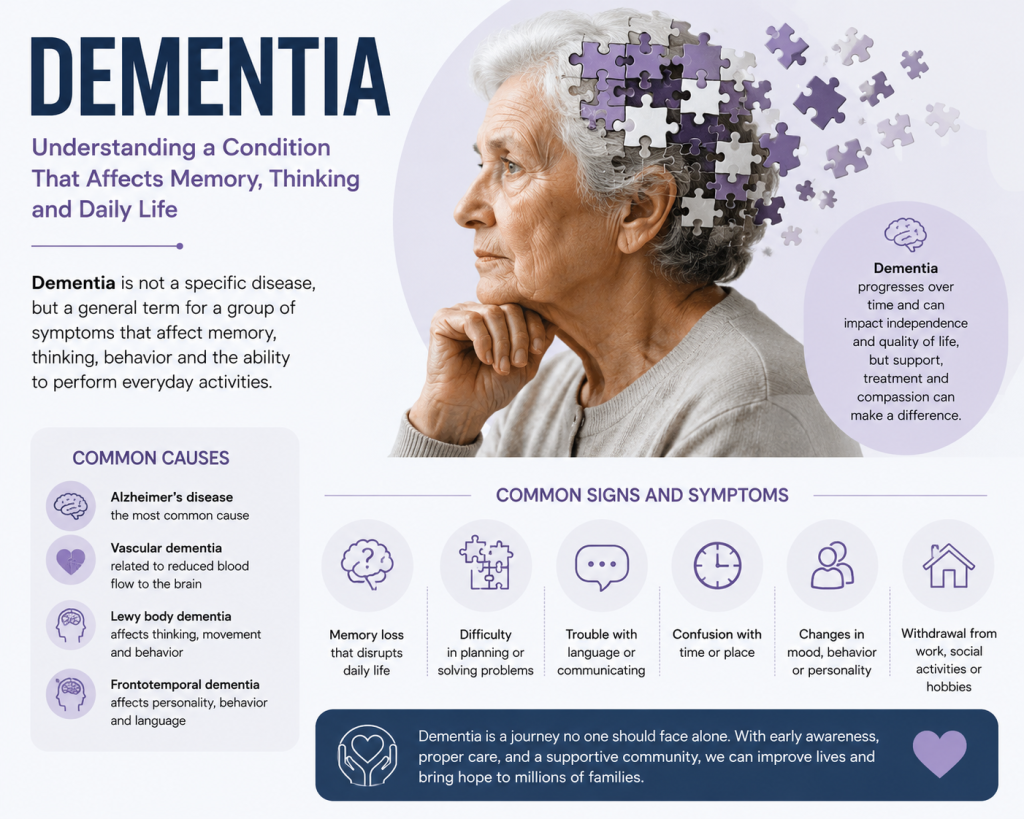
Dementia is more than just memory loss—it’s a complex neurological condition that affects millions of families worldwide. If you’re searching for compassionate, expert care for a loved one experiencing cognitive decline, understanding dementia is the first step toward proper treatment and support.
What is Dementia? Understanding the Condition
Dementia is an umbrella term for a group of symptoms affecting memory, thinking, and social abilities severely enough to interfere with daily life. It’s not a specific disease but rather a syndrome caused by various underlying conditions, with Alzheimer’s disease being the most common cause.
Key Facts About Dementia:
- Dementia affects over 55 million people worldwide
- It’s progressive, meaning symptoms worsen over time
- Early diagnosis significantly improves quality of life
- While more common in older adults, it’s not a normal part of aging
- Various types exist, each with distinct characteristics
Finding the right dementia specialist in Cuttack is crucial for accurate diagnosis and personalized treatment plans. Dr. Sonalika Behera brings years of neurological expertise to help patients and families navigate this challenging journey.
Types of Dementia: Recognizing Different Forms
1. Alzheimer’s Disease
The most common form, accounting for 60-80% of cases. It involves the buildup of abnormal protein deposits in the brain, leading to progressive memory loss and cognitive decline.
Caused by reduced blood flow to the brain, often following a stroke. Symptoms may appear suddenly or progress in a step-wise pattern.
Characterized by abnormal protein deposits (Lewy bodies) in the brain, causing fluctuating cognition, visual hallucinations, and Parkinson’s-like symptoms.
Affects the frontal and temporal lobes of the brain, often impacting personality, behavior, and language skills before memory loss becomes prominent.
A combination of two or more types, most commonly Alzheimer’s disease and vascular dementia.
Early Warning Signs and Symptoms of Dementia
Recognizing early symptoms is critical for timely intervention.
Cognitive Changes:
- Memory loss that disrupts daily life, especially forgetting recently learned information
- Difficulty planning or problem-solving, such as managing finances or following familiar recipes
- Confusion with time or place, losing track of dates, seasons, or locations
- Trouble understanding visual images and spatial relationships
- Problems with words in speaking or writing, such as struggling to find the right word
- Poor judgment and decision-making abilities
Behavioral and Psychological Changes:
- Withdrawal from work or social activities
- Changes in mood and personality
- Increased anxiety, depression, or agitation
- Suspiciousness or paranoia
- Misplacing things and losing the ability to retrace steps
Important: If you or a loved one experiences these symptoms, don’t dismiss them as “normal aging.” Contact Dr. Sonalika Behera at 80188 31399 for a comprehensive neurological evaluation.
Dementia Diagnosis: The Role of a Neurologist
Accurate diagnosis requires expertise and comprehensive evaluation. As the best neurologist in Cuttack for dementia care, Dr. Sonalika Behera employs a multi-faceted diagnostic approach:
Diagnostic Process:
- Detailed Medical History: Understanding symptoms, family history, and current medications
- Cognitive and Neuropsychological Tests: Assessing memory, problem-solving, attention, counting, and language skills
- Physical and Neurological Examination: Evaluating reflexes, coordination, balance, and sensory function
- Brain Imaging: MRI or CT scans to identify structural changes, strokes, or tumors
- Laboratory Tests: Blood tests to rule out vitamin deficiencies, thyroid problems, or other reversible causes
- Psychiatric Evaluation: Assessing for depression or other mental health conditions that may mimic dementia
Early and accurate diagnosis is essential because some causes of cognitive decline are treatable.
Best Dementia Treatment in Cuttack: Comprehensive Care Approach
While there’s currently no cure for most types of dementia, the trusted dementia treatment in Cuttack focuses on managing symptoms, slowing progression, and improving quality of life. Dr. Sonalika Behera offers a holistic treatment approach tailored to each patient’s unique needs.
Treatment Strategies Include:
1. Medication Management
- Cholinesterase Inhibitors: Help boost communication between nerve cells (e.g., Donepezil, Rivastigmine, Galantamine)
- Memantine: Regulates glutamate activity to improve memory and learning
- Symptom-Specific Medications: For depression, anxiety, sleep disturbances, or behavioral issues
2. Cognitive Stimulation Therapy
Engaging activities and exercises designed to improve memory, language skills, and problem-solving abilities.
3. Lifestyle Interventions
- Regular physical exercise to improve cardiovascular health
- Brain-stimulating activities like puzzles, reading, or learning new skills
- Social engagement to maintain emotional well-being
- Nutritious diet rich in omega-3 fatty acids, antioxidants, and vitamins
- Quality sleep and stress management
4. Family Education and Support
Dr. Sonalika Behera understands that dementia affects the entire family. She provides comprehensive guidance on:
- Creating a safe home environment
- Communication strategies for interacting with dementia patients
- Managing challenging behaviors
- Caregiver self-care and support resources
- Legal and financial planning
5. Regular Monitoring and Adjustment
Dementia is progressive, requiring ongoing assessment and treatment modification to ensure optimal care at every stage.
Prevention and Risk Reduction: Protecting Your Brain Health
While not all dementia cases can be prevented, research shows that certain lifestyle modifications can significantly reduce risk.
Brain-Healthy Lifestyle Strategies:
- Stay Physically Active: Regular exercise improves blood flow to the brain and reduces cardiovascular risk factors
- Maintain Mental Stimulation: Engage in intellectually challenging activities like reading, puzzles, or learning new skills
- Foster Social Connections: Regular social interaction supports cognitive health and emotional well-being
- Eat a Mediterranean-Style Diet: Rich in fruits, vegetables, whole grains, fish, and healthy fats
- Manage Cardiovascular Risk Factors: Control blood pressure, cholesterol, diabetes, and obesity
- Quit Smoking: Smoking significantly increases dementia risk
- Limit Alcohol: Excessive alcohol consumption can contribute to cognitive decline
- Protect Your Head: Prevent traumatic brain injuries by wearing helmets and seatbelts
- Get Quality Sleep: Adequate sleep is essential for brain health and memory consolidation
- Manage Stress: Chronic stress can negatively impact cognitive function
When to See a Dementia Specialist: Don’t Wait
Many families delay seeking medical help for dementia symptoms, attributing them to normal aging. However, early intervention is crucial for better outcomes. You should schedule an appointment with Dr. Sonalika Behera if you notice:
- Progressive memory problems affecting daily activities
- Difficulty completing familiar tasks
- Confusion about time, place, or people
- Changes in judgment or decision-making
- Withdrawal from social activities
- Personality or behavior changes
- Difficulty with language or communication
Early diagnosis benefits include:
- Identifying and treating reversible causes of cognitive decline
- Starting medications when they’re most effective
- More time for planning and making decisions about future care
- Access to clinical trials and emerging treatments
- Better symptom management and quality of life
Treatment For Dementia: Subham HealthCare Facilities
Dr. Sonalika Behera practices at Subham HealthCare, a modern medical facility equipped to provide comprehensive dementia care. The dementia treatment offers:
- Advanced neuroimaging capabilities (MRI, CT scans)
- Comprehensive laboratory services for diagnostic workup
- Comfortable consultation rooms for patient and family discussions
- Accessible location in Cuttack with convenient parking
- Collaborative care with other specialists when needed
- Patient-friendly environment designed for cognitive health assessments
Dementia Care in Odisha and India: A Growing Need
India faces a rapidly increasing dementia burden, with an estimated 5.3 million people currently living with the condition. In Odisha, access to specialized dementia care has historically been limited, making Dr. Sonalika Behera’s expertise particularly valuable for the region.
As one of the providers of the trusted dementia treatment in Cuttack, Dr. Sonalika Behera brings world-class neurological care to Cuttack, eliminating the need for patients to travel to major metropolitan areas for expert consultation.
Regional Advantages:
- Local access to specialized dementia care without traveling to Bhubaneswar or Kolkata
- Cultural understanding and language accessibility
- Personalized care that considers regional dietary and lifestyle factors
- Affordable, high-quality neurological services
- Convenient follow-up and ongoing management
Schedule Your Consultation: Take the First Step Towards Expert Care
If you’re concerned about memory loss or cognitive changes in yourself or a loved one, don’t wait. Early evaluation and intervention can make a significant difference in managing dementia and maintaining quality of life.
Contact Dr. Sonalika Behera Today

📞 Phone: 80188 31399
Call to schedule an appointment or discuss your concerns. The clinic staff will help you find a convenient consultation time.
📧 Email: drsonalika10@gmail.com
Send your inquiries or request an appointment via email. You can also share relevant medical records for review before your visit.
📍 Clinic Location:
Subham HealthCare
Ganguly Lane, Canal Road, Jobra Rd
Cuttack, Odisha 753003
🗺️ Get Directions: View on Google Maps
Easily accessible location with convenient parking. The clinic is well-connected by public transport and private vehicles.
What to Bring to Your First Appointment For Dementia Care:
- List of current medications and supplements
- Previous medical records, test results, or brain scans if available
- Description of symptoms and when they started
- Family medical history, especially neurological conditions
- List of questions or concerns you want to discuss
- A family member or friend who can provide additional observations
Your journey toward better dementia care starts with a single step. Let Dr. Sonalika Behera guide you through it with expertise, empathy, and evidence-based medicine.
Frequently Asked Questions About Dementia Care
Is dementia the same as Alzheimer’s disease?
No. Dementia is an umbrella term for symptoms affecting cognitive function, while Alzheimer’s disease is a specific type of dementia and the most common cause. Other types include vascular dementia, Lewy body dementia, and frontotemporal dementia.
Can dementia be cured?
Currently, most types of dementia cannot be cured, but treatments can help manage symptoms, slow progression, and improve quality of life. Some causes of cognitive decline (like vitamin deficiencies or medication side effects) are reversible, which is why proper diagnosis is essential.
At what age does dementia typically start?
While dementia most commonly affects people over 65, it can occur earlier. Early-onset dementia can develop in people in their 40s and 50s. Age is the strongest risk factor, but dementia is not an inevitable part of aging.
How long can someone live with dementia?
This varies greatly depending on the type of dementia, age at diagnosis, overall health, and other factors. Some people live with dementia for 4-8 years after diagnosis, while others may live 20 years or more. Dr. Sonalika Behera can provide more specific information based on individual circumstances.
Is dementia hereditary?
While having a family member with dementia does increase risk, most dementia cases are not directly inherited. Certain rare genetic mutations can cause early-onset familial Alzheimer’s disease, but these account for less than 5% of cases. Dr. Behera can assess your individual risk factors.
What’s the difference between normal aging and dementia?
Normal aging may involve occasional forgetfulness (like misplacing keys) but doesn’t significantly impact daily function. Dementia involves progressive cognitive decline that interferes with independence—forgetting how to use keys, what they’re for, or repeatedly losing them and being unable to retrace steps.
Can lifestyle changes really reduce dementia risk?
Yes. Research shows that maintaining cardiovascular health, staying mentally and socially active, eating a healthy diet, exercising regularly, and managing conditions like diabetes and hypertension can significantly reduce dementia risk.
Dementia is a challenging diagnosis, but you don’t have to face it alone. With the right medical expertise, support, and care plan, people with dementia and their families can maintain quality of life and dignity throughout the disease journey.

